Introduction

Successful construction projects depend on more than proper excavation, grading, and compaction. Before foundations are poured or pavement is installed, engineers must verify that the compacted soil meets the project’s specifications. One important method used for this verification is known as a nuclear density test, so you may be wondering, what is a nuclear density test?
One of the fastest and most widely used methods for performing this verification is the nuclear density test. Despite its name, many people misunderstand what this test actually does.
A nuclear density test does not compact soil. Instead, it measures the density and moisture content of soil that has already been compacted. The results help engineers determine whether the ground is ready to support buildings, roads, parking lots, utilities, and other structures.
Because testing is performed quickly and without disturbing the soil, nuclear density testing has become one of the construction industry’s most valuable quality control tools.
Quick Summary
A nuclear density test measures the density and moisture content of compacted soil using a portable nuclear density gauge. Engineers and technicians use the results to verify that the soil meets project specifications before construction continues, helping reduce settlement, improve structural support, and increase long-term performance.
What Is a Nuclear Density Test?
A nuclear density test is a field testing method used to measure the density and moisture content of compacted soil or aggregate. After construction crews compact the soil, a qualified technician places a nuclear density gauge on the surface or over a prepared test location. The gauge measures the density of the compacted material and compares the results to the required engineering specifications.
If the required density has been achieved, construction can continue. If not, additional compaction, moisture adjustment, or stabilization may be necessary before the project moves forward.
The purpose of nuclear density testing is simple:
Verify that the ground beneath the project has been compacted properly before additional construction takes place.
Why Nuclear Density Testing Is Important

Every structure depends on the stability of the soil beneath it. Without proper verification, weak or poorly compacted areas may remain hidden until settlement or structural problems appear months or years later. Nuclear density testing helps identify these issues before they become expensive repairs.
Benefits include:
- Verifies proper soil compaction
- Confirms compliance with engineering specifications
- Helps reduce settlement
- Improves pavement performance
- Supports stronger foundations
- Reduces costly rework
- Improves construction quality control
- Provides immediate field results
Rather than relying solely on visual inspections, contractors receive measurable data that confirms whether the required density has been achieved.
How a Nuclear Density Gauge Works
Although the technology behind nuclear density testing is sophisticated, the basic concept is relatively easy to understand. The gauge contains a very small sealed radioactive source. During testing, the instrument sends a controlled amount of radiation into the compacted soil and measures how much energy returns to the device.
Using this information, the gauge quickly calculates:
- Soil density
- Moisture content
The entire process usually takes only a few minutes and does not damage or disturb the compacted material. Because results are available immediately, contractors can make adjustments while equipment and crews remain on site.
When Is Nuclear Density Testing Required?
Nuclear density testing is commonly specified whenever engineered fill or compacted soils must meet project specifications.
Typical applications include:
- Residential building pads
- Commercial foundations
- Industrial developments
- Roads and highways
- Parking lots
- Airport runways
- Utility trenches
- Bridge approaches
- Retaining wall backfill
- Structural fill projects
- Embankments
- Site development
Testing requirements are usually established by the project engineer, geotechnical engineer, or local building authority.
Equipment Used During Testing
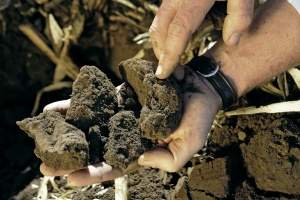
The primary instrument used is the nuclear density gauge.
Although manufacturers offer several models, most gauges include:
- Radioactive source
- Radiation detector
- Electronic control unit
- Digital display
- Probe assembly
- Internal calibration system
Technicians also use:
- Reference blocks
- Drill rods
- Guide plates
- Cleaning tools
- Calibration equipment
Proper calibration and maintenance help ensure accurate and repeatable test results.
Understanding Test Results
After testing is complete, technicians compare the measured density with the required laboratory compaction standard, typically established through either the Standard Proctor Test or Modified Proctor Test.
Results commonly include:
- Dry density
- Moisture content
- Percent compaction
These values help engineers determine whether the compacted soil satisfies project requirements. If results meet the specifications, construction proceeds. If not, additional corrective work may be required before further construction continues.
Advantages of Nuclear Density Testing
Nuclear density testing has become one of the industry’s preferred field testing methods because it offers several important advantages.
These include:
- Fast results
- Non-destructive testing
- Accurate field measurements
- Moisture content measurement
- Minimal project delays
- Immediate quality control
- Widely accepted by engineers
- Efficient testing of large projects
For many construction projects, these advantages make nuclear density testing more practical than some traditional field testing methods.
______________________________________________________________________________________________________________________________________
Limitations of Nuclear Density Testing

Although nuclear density testing is one of the most widely accepted field testing methods, it is not appropriate for every situation.
Some limitations include:
Requires Licensed Personnel
Because the gauge contains a sealed radioactive source, operators must receive specialized training and work under applicable federal and state regulations.
Equipment Costs
Nuclear density gauges are more expensive than many traditional field testing methods and require routine calibration and maintenance.
Soil Limitations
Certain soil types, oversized rock, unusual moisture conditions, or site-specific factors may affect testing accuracy. In these situations, engineers may recommend additional testing methods to verify results.
Regulatory Requirements
Storage, transportation, calibration, and operation of nuclear density gauges must comply with applicable regulatory requirements. Companies using these devices are responsible for following all licensing and safety procedures.
Despite these limitations, nuclear density testing remains one of the fastest and most reliable methods for verifying field compaction.
Safety Requirements
Safety is an important part of every nuclear density testing program. Although the radioactive source inside the gauge is very small and sealed, operators must follow established procedures to protect themselves and others.
Typical safety practices include:
- Operator training and certification
- Routine equipment inspections
- Daily operational checks
- Proper storage in approved transport containers
- Secure transportation
- Radiation monitoring, when required
- Compliance with applicable federal and state regulations
When handled properly by qualified personnel, nuclear density gauges have been used safely on construction projects for many years.
Comparing Nuclear Density Testing to Other Field Density Tests
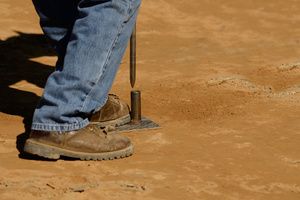
Several methods can be used to verify field compaction. Each has advantages depending on the project requirements.
Nuclear Density Test
- Fast results
- Measures density and moisture content
- Non-destructive
- Ideal for routine quality control
Sand Cone Test
- Highly accurate
- No radioactive materials
- More time-consuming
- Often used when nuclear testing is unavailable or not permitted
Drive Cylinder Test
- Simple equipment
- Works well in certain soil conditions
- Limited by soil type
Engineers select the most appropriate testing method based on project specifications, soil conditions, regulatory requirements, and available equipment.
Real-World Applications
Nuclear density testing is used on thousands of construction projects every year.
Common applications include:
- Residential developments
- Commercial building pads
- Industrial facilities
- Highways
- Airport runways
- Parking lots
- Utility installations
- Bridge approaches
- Retaining wall backfill
- Structural fill projects
- Embankments
- Large site development projects
Because testing provides immediate results, contractors can quickly identify areas requiring additional compaction before construction continues.
Contractor Tip
One of the biggest misconceptions I hear is that the nuclear density gauge somehow improves compaction. It doesn’t. The compaction equipment performs the work. The nuclear density gauge simply verifies whether that work meets the engineer’s requirements.
I’ve seen projects where the surface appeared perfectly compacted, but testing revealed soft areas beneath that would eventually have caused settlement. Finding those problems before concrete is poured or pavement is installed is one of the reasons nuclear density testing has become such an important quality control tool.
Frequently Asked Questions

What is a nuclear density test?
A nuclear density test is a field testing method used to measure the density and moisture content of compacted soil or aggregate to verify compliance with engineering specifications.
Why is a nuclear density test important?
It helps confirm that compacted soil can properly support buildings, roads, parking lots, utilities, and other structures while reducing the risk of settlement and structural problems.
Does a nuclear density gauge compact the soil?
No. The gauge only measures soil density and moisture content after compaction has already been completed.
Is nuclear density testing safe?
Yes. When performed by trained and licensed personnel following established safety procedures, nuclear density testing has been used safely throughout the construction industry for many years.
Who performs nuclear density testing?
Testing is typically performed by qualified geotechnical technicians or engineering testing laboratories operating under applicable licensing and regulatory requirements.
Final Thoughts
Nuclear density testing plays an important role in modern construction because it allows engineers and contractors to verify soil compaction quickly, accurately, and without disturbing the completed work.
Whether constructing a residential home, commercial facility, roadway, airport, or industrial development, confirming proper soil density helps reduce settlement, improve structural performance, and increase the long-term reliability of the finished project.
Although the technology behind the equipment is advanced, the purpose is straightforward: verify that the soil beneath the project has been compacted properly before construction continues. Combined with proper site preparation, soil stabilization, moisture control, and compaction testing, nuclear density testing helps ensure construction projects are built on a solid foundation.
Dirt Connections Network (DCN)
Successful construction projects rely on communication, coordination, and reliable information. Dirt Connections Network (DCN) is a private construction marketplace where contractors, developers, suppliers, trucking companies, engineers, estimators, and other construction professionals connect directly to share project opportunities, material availability, material needs, trucking opportunities, and industry relationships. DCN does not broker projects, arrange hauling, control pricing, or act as a middleman. It simply helps construction professionals build valuable industry connections.
Dirt Connections Public Listings (DCPL)

Finding suitable construction materials can help keep projects on schedule. Dirt Connections Public Listings (DCPL) is a public searchable platform where homeowners, contractors, developers, suppliers, truckers, engineers, and construction professionals can post and discover fill dirt, structural fill, topsoil, aggregates, available materials, and material needs throughout the United States.
Educational Disclaimer
This article is provided for general educational purposes only. Field density verification requirements vary depending on project specifications, soil conditions, engineering recommendations, applicable testing standards, licensing requirements, and local regulations. Always consult the project engineer, geotechnical report, testing laboratory, and applicable regulatory authorities before selecting the appropriate field density testing method for any construction project.
Summary

Dirt Connections was started with one goal in mind: providing quality residential and commercial construction services to clients on time and on budget. Reach out for more information on how we can support your next project.
For your convenience our estimates are free and by appointment. Call 703-940-9949 for a free estimate today!