Before you build a road, parking lot, building pad, foundation, or other structure, one of the most important questions is: What Is Proof Rolling?
Can the ground beneath it support the work that comes next?
A site may look smooth and properly graded on the surface, but hidden weak areas beneath the ground can create expensive problems later. Poorly compacted soil, excessive moisture, unsuitable material, or soft subgrade conditions can lead to settlement, pavement failures, foundation movement, and costly repairs.
This is where proof rolling becomes an important construction quality-control process.
Proof rolling is a practical field evaluation method used to observe how prepared soil responds under a heavy load. A loaded dump truck, roller, or other heavy equipment is driven across the prepared area while experienced professionals observe how the ground performs.
The purpose is simple:
Identify weak areas before they become expensive construction problems.
What Is Proof Rolling?
Proof rolling is a construction technique used to evaluate the stability and performance of a prepared soil surface before placing additional materials or beginning construction.
The process involves passing heavy equipment over the area being evaluated and observing how the soil reacts under the applied load. Areas that show excessive movement, rutting, pumping, or deflection may indicate problems that require correction before construction continues.
Unlike a laboratory test that analyzes a soil sample, proof rolling evaluates the actual performance of the prepared site under realistic field conditions.
The ground is essentially being asked:
“Are you ready to support the load that will be placed on you?”
The answer comes from how the soil responds.
Why Proof Rolling Matters in Construction
A successful construction project starts from the ground up. The strongest building materials and highest-quality workmanship cannot overcome unstable soil conditions beneath the surface.
Proof rolling helps identify problems such as:
- Soft subgrade areas
- Poorly compacted soil
- Excess moisture
- Unstable fill material
- Areas requiring additional compaction
- Locations where unsuitable material may need removal
Finding these issues before construction begins is much less expensive than discovering them after concrete, asphalt, structures, or other improvements have already been installed.
The Relationship Between Proof Rolling and Soil Compaction
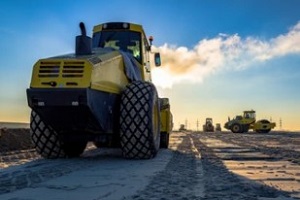
Proof rolling is closely connected to proper soil compaction.
Compaction increases soil density by reducing air voids and improving the soil’s ability to support loads. However, achieving proper compaction is not only about running equipment over the ground.
Successful compaction depends on:
- Proper soil type
- Correct moisture content
- Appropriate equipment
- Proper lift thickness
- Adequate compaction effort
A surface may appear compacted but still contain weak areas beneath the finished grade. Proof rolling helps reveal those areas by applying a heavier practical load across the site.
This is why proof rolling is often used after grading and compaction operations but before final construction begins.
How Proof Rolling Works
The proof rolling process begins after the site has been prepared according to project requirements.
Typical steps include:
1. Preparing the Area
The surface is graded and brought close to the required elevation. Any obvious debris, standing water, or unsuitable material should be addressed before testing begins. The goal is to evaluate the actual prepared subgrade—not a surface affected by avoidable conditions.
2. Selecting the Equipment
The equipment used depends on the project specifications and site conditions.
Common proof rolling equipment includes:
- Loaded dump trucks
- Smooth drum rollers
- Pneumatic tire rollers
- Other heavy construction equipment
The equipment must provide enough weight to create a meaningful evaluation of the soil’s performance.
3. Driving Across the Site
The equipment is driven slowly across the prepared area while the observer watches the soil response. The goal is not simply to see if the equipment can cross the site. The goal is to identify areas where the ground reacts differently.
4. Observing Soil Behavior
Experienced personnel look for signs that the subgrade may not be performing properly.
Common warning signs include:
- Excessive deflection
- Rutting
- Pumping
- Shifting or unstable areas
- Visible movement beneath the equipment
These observations help determine whether additional work is needed before construction proceeds.
______________________________________________________________________________________________________________________________________
Equipment Used for Proof Rolling

The success of a proof rolling evaluation depends on using the right equipment for the project conditions. The goal is to apply enough load to the prepared surface so weak areas become visible before construction continues.
The equipment selected may vary based on:
- Project specifications
- Soil conditions
- Site size
- Required loading conditions
- Type of construction planned
Common equipment used for proof rolling includes:
Loaded Dump Trucks
A loaded dump truck is one of the most common pieces of equipment used for proof rolling. Because dump trucks are already common on many construction sites, they provide a practical way to apply a significant wheel load to the prepared subgrade.
As the truck travels across the site, inspectors and contractors watch for:
- Excessive sinking
- Wheel tracking
- Surface movement
- Pumping of wet soils
- Areas that behave differently from surrounding ground
A properly prepared subgrade should generally support the loaded vehicle without significant movement.
Smooth Drum Rollers
Smooth drum rollers are another common option for evaluating and compacting prepared soil surfaces.
These machines provide:
- Consistent loading
- Uniform pressure distribution
- Controlled passes across the site
Smooth drum rollers are commonly used during earthwork operations because they can both compact material and help identify areas that may require additional attention.
Pneumatic Tire Rollers
Pneumatic tire rollers use multiple rubber tires to apply pressure over the soil surface. These rollers can be useful because the tires provide a kneading action that can reveal unstable areas that may not always be obvious with other equipment. They are often used when contractors need a more flexible loading pattern across different soil conditions.
What Contractors Look For During Proof Rolling

Proof rolling is not simply driving equipment over dirt and watching what happens. The value comes from understanding the soil response. Experienced contractors and inspectors look for several warning signs.
Rutting
Rutting occurs when the surface soil deforms and creates visible wheel paths as equipment passes over the area.
Minor surface marks may be acceptable depending on project requirements, but excessive rutting may indicate:
- Weak subgrade
- Excess moisture
- Insufficient compaction
- Unsuitable material
Deep ruts can create drainage problems and may require correction before additional construction proceeds.
Pumping
Pumping occurs when water and fine soil particles move upward through the surface under pressure. This condition is commonly associated with wet, unstable soils.
Signs of pumping may include:
- Water appearing at the surface
- Soil movement beneath equipment
- Soft, unstable areas
- Loss of support under heavy loads
Pumping is a warning sign that the soil may not provide the required support without additional work.
Deflection
Deflection refers to visible movement or bending of the soil surface when a heavy load passes over it. Some movement may occur naturally, but excessive deflection can indicate that the soil structure is not performing as expected.
Areas showing excessive movement may require:
- Additional compaction
- Moisture adjustment
- Soil stabilization
- Removal and replacement of unsuitable material
Soft Spots and Variable Soil Conditions

One of the biggest benefits of proof rolling is identifying inconsistent conditions across a construction site.
A site may appear uniform from the surface but contain areas with:
- Different soil types
- Excess moisture
- Poorly compacted fill
- Previous excavation areas
- Buried unsuitable materials
These hidden conditions can become major problems after construction is complete. Finding them before concrete, asphalt, foundations, or structures are installed gives the project team an opportunity to correct the issue.
Proof Rolling vs. Compaction Testing
Proof rolling and compaction testing are related, but they are not the same. A compaction test measures specific properties of the soil, such as density and moisture content, to determine whether the material meets project requirements. Proof rolling evaluates how the actual ground performs under a heavy load.
A project may use both methods because they answer different questions:
Compaction testing asks:
“Did we achieve the required density?”
Proof rolling asks:
“Does the ground actually perform when loaded?”
Together, these processes provide a more complete understanding of site conditions.
Correcting Problems Found During Proof Rolling
Finding a weak area is not the end of the process. It is an opportunity to correct the issue before it becomes a future failure.
Possible solutions may include:
Additional Compaction
If the material is suitable but has not achieved the required density, additional compaction may improve performance.
Moisture Conditioning
If soil moisture is outside the ideal range, contractors may need to add moisture or allow the material to dry before additional compaction.
Soil Stabilization
Some soils require improvement through stabilization methods such as lime or cement treatment.
Removal and Replacement
In some cases, unsuitable material must be removed and replaced with appropriate structural fill. The correct solution depends on the soil conditions, engineering requirements, and intended use of the site.
______________________________________________________________________________________________________________________________________
Real-World Contractor Observation
After more than 44 years in construction, one thing I have learned is that successful projects begin long before concrete, asphalt, or structures are installed. They begin with understanding the ground. Proof rolling is valuable because it gives contractors, engineers, and project teams an opportunity to evaluate how the prepared soil actually performs before construction moves forward.
A site can look excellent from the surface. The grade may appear correct, the material may be placed, and the area may look ready for the next phase. However, hidden weak areas beneath the surface can create problems that may not appear until months or years later.
During proof rolling, the ground is being challenged under a realistic load. The goal is not simply to drive equipment across the site. The goal is to observe how the soil responds.
- Does the ground remain stable?
- Does it show movement?
- Are there areas that pump, rut, or deflect differently than surrounding areas?
Those observations provide valuable information before the next phase of construction begins. In my experience, earthwork is not just about moving dirt from one location to another. It is about understanding the material, recognizing changing site conditions, and preparing the ground properly before building on it. The work that happens beneath the surface often determines how well a project performs for decades.
Applications of Proof Rolling in Construction

Proof rolling is used on many different construction projects because nearly every structure depends on stable soil conditions.
Building Pads
A building pad provides the prepared area where a structure will be constructed. Before foundations are installed, proof rolling can help identify areas that may not have the strength or stability required to support the planned structure.
Potential corrections may include:
- Additional compaction
- Moisture conditioning
- Soil stabilization
- Removal and replacement of unsuitable material
A properly prepared building pad provides a stronger starting point for the foundation above.
Roads and Parking Lots
Roadways and parking areas experience repeated vehicle loading throughout their service life.
A weak subgrade can contribute to:
- Pavement cracking
- Rutting
- Uneven settlement
- Premature failure
Proof rolling helps identify unstable areas before asphalt or concrete pavement is placed. Correcting these conditions early can help improve long-term pavement performance.
Foundations
A foundation transfers the weight of a structure into the supporting soil. If weak areas exist beneath the foundation, settlement and movement may occur over time. Proof rolling can help identify inconsistent soil conditions that require additional evaluation before foundation construction begins.
Utility Trenches
Utility work often requires excavation, replacement, and compaction of soil. Poorly compacted trench backfill can become a source of future settlement problems.
Proof rolling can help identify areas where:
- Backfill has not been properly compacted
- Soil conditions are unstable
- Additional corrective work is needed
This is especially important when trenches are located beneath future roads, driveways, sidewalks, or structures.
Common Questions About Proof Rolling
Is proof rolling the same as a compaction test?
No. Although both processes evaluate soil conditions, they provide different information. A compaction test measures soil density and moisture content compared with project specifications. Proof rolling evaluates how the prepared ground responds when placed under a heavy load. Many construction projects use both methods because together they provide a more complete understanding of site conditions.
Does proof rolling replace engineering testing?
No. Proof rolling is a valuable field evaluation method, but it does not replace project-specific engineering requirements or required testing procedures.
The proper evaluation methods depend on:
- Soil conditions
- Project specifications
- Intended use of the site
- Engineering recommendations
What happens if proof rolling finds weak areas?
Finding a weak area is not a failure of the project. It is an opportunity to correct the condition before construction continues.
Possible solutions may include:
- Additional compaction
- Adjusting moisture content
- Improving drainage
- Soil stabilization
- Removing and replacing unsuitable material
The correct solution depends on the cause of the problem.
When should proof rolling be performed?
Proof rolling is typically performed after site preparation and compaction activities but before major construction begins.
This timing allows problems to be identified while corrections can still be made efficiently.
Final Thoughts
Proof rolling is a simple but powerful construction quality-control process. By applying a controlled heavy load to prepared soil, contractors and engineers can identify areas that may not perform as expected before they become expensive problems.
Whether preparing a building pad, roadway, parking lot, utility area, or foundation site, understanding how the ground responds before construction begins is one of the most important steps in successful earthwork.
Strong projects start with strong foundations. And strong foundations begin with understanding the soil beneath them.
Dirt Connections Network
Construction is built on more than materials and equipment. It is built on relationships, communication, and trusted connections.
The Dirt Connections Network is designed to help construction professionals increase visibility, build industry relationships, and discover opportunities within the construction community.
Whether you are looking for materials, trucking resources, earthwork opportunities, or connections with other qualified construction professionals, the Dirt Connections Network provides a place to connect with others who understand the industry.
🟧 Find Materials, Trucks & Projects / Explore Now
Related Construction Knowledge Articles
What Is Soil Proof Rolling?
Proof rolling is a construction verification process that uses heavy equipment to evaluate prepared soil conditions. It helps identify weak areas, soft spots, excessive movement, or areas that may require additional preparation.
Why Is Proof Rolling Important?
Proof rolling helps confirm that prepared soil can support the next stage of construction. It provides contractors with valuable information before placing pavement, concrete, structures, or additional materials.
When Is Proof Rolling Required?
Proof rolling is commonly performed after grading and compaction but before final construction activities begin. Project specifications and site conditions determine when this process is appropriate.
What Does Proof Rolling Identify?
Proof rolling can reveal areas with poor support, unstable soil, excessive moisture, or inadequate compaction that may not be visible from the surface.
What Happens During a Proof Roll?
During a proof roll, heavy equipment travels across the prepared surface while contractors observe how the soil responds. Areas that move, rut, or pump may require additional evaluation.
What Causes Soil to Fail Proof Rolling?
Soil may fail proof rolling because of excessive moisture, poor compaction, unsuitable material, weak subgrade conditions, or inadequate site preparation.
What Is Subgrade Preparation?
Subgrade preparation involves preparing the existing ground before construction begins. The process may include grading, removing unsuitable materials, improving drainage, and creating a stable surface.
What Happens After a Failed Proof Roll?
A failed proof roll does not always mean the entire area must be replaced. Contractors may address problem areas through additional drying, removal and replacement, improved drainage, or additional compaction.
How Does Proof Rolling Prevent Construction Problems?
Proof rolling helps identify hidden soil problems before they affect finished improvements. Finding weak areas early can help reduce settlement, cracking, and future repair costs.
What Is the Difference Between Proof Rolling and Compaction Testing?
Proof rolling evaluates how the ground performs under a heavy load, while compaction testing measures soil density and moisture conditions. Both methods provide valuable information about soil readiness.
Educational Disclaimer
This article is provided for general educational purposes only. Construction conditions vary based on soil type, location, project specifications, engineering requirements, and site conditions.
Proof rolling procedures, acceptance criteria, and corrective actions should always be determined based on project-specific requirements and recommendations from qualified construction professionals, engineers, and testing specialists.
Summary

Dirt Connections was started with one goal in mind: providing quality residential and commercial construction services to clients on time and on budget. Reach out for more information on how we can support your next project.
For your convenience our estimates are free and by appointment. Call 703-940-9949 for a free estimate today!