Introduction
 Every successful construction project begins with one critical element: the ground beneath it. Regardless of whether you’re building a home, commercial building, roadway, parking lot, retaining wall, or utility system, the soil must be capable of supporting the structure for years to come.
Unfortunately, not every construction site has ideal soil conditions. Some soils are too soft, too wet, too loose, or too expansive to provide a reliable foundation. Left untreated, these conditions can lead to settlement, cracking, pavement failure, drainage problems, and costly repairs.
This is where soil stabilization becomes an essential part of modern construction.
Rather than removing and replacing unsuitable soil, engineers and contractors can often improve the existing material through proven stabilization techniques. The result is a stronger, more durable foundation that performs better under changing weather conditions and heavy loads.
Whether the project involves highways, residential developments, commercial buildings, airports, or industrial facilities, soil stabilization helps create safer, longer-lasting infrastructure while reducing construction costs and improving project efficiency.
Quick Summary
Soil stabilization is the process of improving the engineering properties of soil so it can safely support construction projects. Depending on the soil conditions, engineers may use mechanical methods, chemical additives, or reinforcement materials to increase strength, reduce settlement, improve drainage, and create a more stable foundation.
Why Soil Stabilization Is Important
Every construction project depends on the quality of the soil beneath it.
Even the strongest concrete or steel structure can experience problems if it rests on unstable ground. Weak soils may compress under weight, shift with seasonal moisture changes, or lose strength during periods of heavy rainfall.
Without proper stabilization, these issues may result in:
- Uneven settlement
- Cracked foundations
- Pavement failure
- Sidewalk movement
- Utility damage
- Retaining wall movement
- Drainage problems
- Increased maintenance costs
By improving the soil before construction begins, contractors can significantly reduce these risks and create a stronger, more dependable foundation for the entire project.
In many cases, soil stabilization also allows construction to proceed without the expense of excavating and replacing thousands of cubic yards of unsuitable material.
When Is Soil Stabilization Needed?
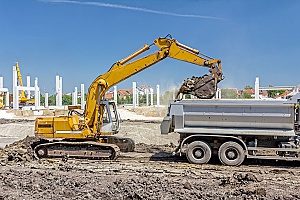
Not every project requires soil stabilization. However, it becomes an important consideration whenever existing soil cannot safely support the planned construction.
Engineers commonly recommend stabilization when encountering:
- Soft clay soils
- Expansive clay (fatty clay)
- High-moisture soils
- Loose sandy soils
- Silts with poor bearing capacity
- Organic soils
- Areas with repeated freeze-thaw cycles
- Sites with heavy truck traffic
- Roadway subgrades
- Building pads
- Parking lots
- Industrial facilities
- Utility corridors
- Airport runways
Before recommending stabilization, geotechnical engineers typically evaluate soil samples through laboratory testing and field investigations to determine the most appropriate solution for the site’s conditions.
Common Soil Stabilization Methods
There is no single stabilization method that works for every project.
Instead, engineers select the most effective approach based on several factors, including:
- Soil type
- Moisture content
- Project specifications
- Expected structural loads
- Environmental conditions
- Construction schedule
- Long-term performance requirements
Most stabilization methods fall into two primary categories:
Chemical Soil Stabilization
Chemical stabilization improves soil by introducing additives that permanently change its engineering properties.
Common stabilizing materials include:
- Lime
- Portland cement
- Fly ash (where permitted)
- Cement kiln dust
- Slag-based products
- Proprietary chemical stabilizers
These materials react with soil particles to increase strength, reduce plasticity, improve moisture resistance, and minimize shrink-swell behavior.
Chemical stabilization is especially effective for clay soils and highly plastic soils that would otherwise be unsuitable for construction.
Mechanical Soil Stabilization Methods

Mechanical stabilization improves soil through physical means rather than chemical reactions.
Common methods include:
- Compaction
- Moisture conditioning
- Blending different soil types
- Geotextiles
- Geogrids
- Aggregate reinforcement
- Proof rolling
- Undercutting and replacement (when necessary)
Mechanical stabilization is commonly used for roadway construction, parking lots, embankments, utility installations, and building pads where improving soil density and uniformity is the primary objective.
Unlike chemical stabilization, mechanical methods often rely on proper equipment, moisture control, and compaction techniques to achieve the required performance.
How Engineers Choose the Right Stabilization Method
Selecting the proper stabilization technique requires careful evaluation rather than guesswork.
Geotechnical engineers typically consider:
- Soil classification
- Moisture content
- Plasticity index
- Bearing capacity
- Groundwater conditions
- Freeze-thaw potential
- Project budget
- Construction schedule
- Environmental regulations
- Long-term maintenance expectations
The goal is to select a method that provides reliable performance throughout the life of the project while remaining cost-effective.
______________________________________________________________________________________________________________________________________
Benefits of Soil Stabilization
Soil stabilization provides significant advantages for construction projects of every size. Whether building a residential home, commercial development, roadway, or industrial facility, improving the ground beneath the project helps reduce risk while increasing long-term performance.
Some of the most important benefits include:
- Increased soil strength and bearing capacity
- Reduced settlement after construction
- Improved resistance to moisture changes
- Better compaction results
- Increased pavement life
- Reduced maintenance costs
- Improved drainage performance
- Faster construction schedules
- Lower excavation and replacement costs
- Greater long-term structural reliability
In many cases, stabilizing existing soils is more economical than excavating unsuitable material and importing engineered fill. When properly designed and constructed, soil stabilization can save both time and money while improving project performance.
Common Challenges and Best Practices

Although soil stabilization offers many advantages, success depends on proper planning and execution.
Some of the most common challenges include:
Improper Soil Identification
Different soils respond differently to stabilization methods. A solution that performs well in clay may not work effectively in sandy or organic soils.
Incorrect Moisture Content
Moisture plays a critical role in stabilization. Soil that is too wet or too dry may not achieve the required strength or compaction.
Poor Mixing
Chemical stabilizers such as lime or cement must be mixed thoroughly throughout the soil. Uneven distribution can create weak areas that reduce overall performance.
Inadequate Compaction
Even stabilized soils require proper compaction. Skipping this step can lead to future settlement and structural problems.
Insufficient Testing
Field testing and quality control help verify that stabilization meets engineering specifications before construction continues.
Following geotechnical recommendations, proper testing procedures, and established construction practices greatly improves the likelihood of long-term success.
Real-World Applications of Soil Stabilization
Soil stabilization is used on a wide variety of construction projects throughout the world.
Common applications include:
- Residential subdivisions
- Commercial building pads
- Industrial facilities
- Highways and roadways
- Airport runways
- Parking lots
- Bridge approaches
- Utility trenches
- Railroads
- Retaining wall foundations
- Embankments
- Land development projects
Many projects in areas with expansive clay or weak subgrade soils would not be practical without some form of stabilization.
Contractor Tip
Experienced contractors understand that correcting poor soil conditions before construction begins is almost always less expensive than repairing structural problems after a project is completed.
Proper soil testing, stabilization, moisture control, and compaction help reduce change orders, minimize delays, and improve the long-term performance of the finished project. Investing in quality site preparation often produces substantial savings over the life of a structure.
Frequently Asked Questions

What is soil stabilization?
Soil stabilization is the process of improving the engineering properties of soil to increase its strength, durability, and load-bearing capacity for construction projects.
Why is soil stabilization important?
It helps reduce settlement, improve structural support, increase pavement life, control moisture-related problems, and create safer foundations for buildings and infrastructure.
What materials are commonly used for soil stabilization?
Depending on the project, engineers may use lime, Portland cement, fly ash (where permitted), geotextiles, geogrids, crushed stone, or other engineered stabilization products.
Is soil stabilization always necessary?
No. Many sites have naturally suitable soils. Stabilization is typically recommended only when existing soil conditions cannot safely support the planned construction.
Who determines whether soil stabilization is required?
A geotechnical engineer typically evaluates soil conditions through field investigations and laboratory testing before recommending an appropriate stabilization method.
Final Thoughts
Soil stabilization plays a vital role in modern construction by transforming weak or unsuitable soils into reliable foundations capable of supporting long-lasting infrastructure.
Whether using chemical additives, mechanical methods, or reinforcement systems, stabilization helps improve soil performance, reduce maintenance costs, minimize settlement, and extend the service life of roads, foundations, parking lots, and other structures.
Every project presents unique soil conditions, which is why proper site investigation, engineering analysis, and quality construction practices remain essential. Understanding how soil stabilization works allows homeowners, contractors, developers, and engineers to make better decisions before construction begins.
Dirt Connections Network (DCN)
Successful construction projects rely on communication as much as engineering. Dirt Connections Network (DCN) is a private construction marketplace where contractors, developers, suppliers, trucking companies, engineers, estimators, and other construction professionals connect directly to share project opportunities, material availability, material needs, trucking opportunities, and industry relationships. DCN does not broker projects, arrange hauling, control pricing, or act as a middleman—it simply helps construction professionals build valuable industry connections.
Dirt Connections Public Listings (DCPL)
Finding suitable construction materials is an important part of many site development projects. Dirt Connections Public Listings (DCPL) is a public searchable platform where homeowners, contractors, developers, suppliers, truckers, engineers, and construction professionals can post and discover fill dirt, structural fill, topsoil, aggregates, available materials, and material needs throughout the United States.
Educational Disclaimer
This article is provided for general educational purposes only. Soil stabilization requirements vary depending on soil conditions, project specifications, engineering recommendations, environmental factors, and local building regulations. Always consult a qualified geotechnical engineer, project engineer, and applicable building authorities before selecting or implementing any soil stabilization method.
Summary

Dirt Connections was started with one goal in mind: providing quality residential and commercial construction services to clients on time and on budget. Reach out for more information on how we can support your next project.
For your convenience our estimates are free and by appointment. Call 703-940-9949 for a free estimate today!